Wednesday, December 14, 2005

Short Review of Narnia

This morning I decided to take full advantage of the flexibility of schedule allowed by homeschooling and the kids and I went on a fieldtrip to Narnia, the movie that is. After spending a looong time coveringour ears and averting our eyes during all the commercials and many previews leading up to the feature presentation, we settled in for two plus hours of delight (Turkish or otherwise).

This movie seems to have been made just at the right time. The computer technology employed made talking animals very believable. Mr. and Mrs. Beaver were especially a joy to watch.

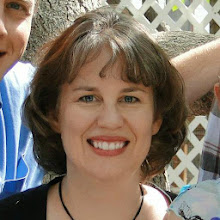
The young actress who played Lucy was charming and natural and I loved watching her walk into Narnia for the first time. Several people have claimed that the actress bears a resemblance to my niece, Josi, and after seeing the movie, I'd have to concur. What do you think?




It never struck me this way reading the book, but it really creeped me out watching the movie to see Lucy persuaded to go away alone with a strange male, namely Mr. Tumnus. I guess the mother in me rebelled at that.

I do have to say that the movie is NOT on par with the book. I'm glad that I saw the movie, but the story was somewhat weakened. My first big moment of disappointment came when Father Christmas attributed the thaw of spring to the hope brought by the coming of the children, rather than the movement of Aslan.

Aslan himself, while visually well-done, was smaller than my imagination. He needed to be LARGER!! The book described him as larger, grander, and more majestic than a regular lion. And why oh why were the children not AFRAID of him? I guess the script-writer didn't think that a good being should elicit fear and trembling. The witch wasn't even fearful... very poorly done on
that score.

To sum it up, the movie was merely very good when it could have been great. This review says it better than I can.

Sunday, October 30, 2005

Savory Soups to Sip

The following soups are my family's favorites:

Garlicky Garbanzo Soup

Time: 30 minutes Yield: 4 servings (but I double this)

Here is a quick and easy, but rich tasting soup...

Ingredients:
29 oz. can chickpeas, rinsed and drained
2 c. (packed) packaged, prewashed baby spinach; or thinly sliced regular spinach leaves
3 cups chicken broth or chicken bouillon
8 large cloves garlic (Yes! 8! Don't skimp!)
1 1/2 tsp. dried oregano
1/4 tsp. dried rosemary

1. Place all of the ingredients, except for the spinach, in a 4 qt. pot, and bring to a boil over high heat. Reduce the heat to low, and simmer for 10 minutes, stirring occasionally.
2. Transfer the ingredients to a blender, and puree until smooth.
3. Return the puree to the pot and stir in the spinach. Cover, and cook over medium-low heat for 5-7 mins., or until the spinach is tender. Serve immediately.


Butternut and Ham Bisque

Yield: 6 servings Source: Family Fun magazine

This recipe is more work, but very rewarding!

2 T. butter
1 very large sweet onion, chopped
1/2 tsp. dried rosemary
2 cloves garlic, minced
5 cups peeled, diced butternut squash
1 c. peeled, diced all-purpose potatoes (sometimes I omit this w/o much consequence)
5 c. chicken stock or chicken bouillon
1 tsp. salt
black pepper to taste
1/2 c. light cream (I've been known to use milk)
1 1/2 cups diced cooked ham

Melt butter in medium soup pot or a large saucepan. Stir in the onion and rosemary. Partially cover the pan and cook the onion over moderate heat for 10 minutes, stirring occasionally. Stir in the garlic and cook another minute.

Add the squash, potatoes, chicken stock, and salt and bring to a boil. Reduce the heat and cover the pot. Cook the soup at a low boil for 20 minutes or until the vegetables are very soft. Remove the pan from the heat.

Using a slotted spoon, transfer the soup solids and a ladleful of broth to a food processor or blender and puree in batches. Stir the puree back into the broth. Stir in the pepper, cream, and ham, heating for several minutes before serving.


Friday, October 07, 2005

Movie Night (Links and Trivia)

I am not a fan of war movies, or so I thought until I read World magazine's review of To End All Wars and watched that particular movie. To End All Wars was deeply moving and thought-provoking. It portrayed the contrast between the Japanese code of bushido and a Christian world view. The film conveyed the life-changing power of self -sacrifice. Though it realistically showed the brutality of the POW camp, I felt uplifted and inspired at the end of the movie, rather than empty and depressed. I loved how it illustrated the eloquence of Shakespeare speaking of the human condition and giving voice to even the prisoner's experience. But even more, I deeply appreciated how it displayed the power of God's Word and the Lord Jesus to transform the lives of prisoners and captors alike.

Tonight, my husband and I watched
The Bridge over the River Kwai. While the movie, was well-done and worth watching, I still prefer To End All Wars.

I must say, we were surprised at the similarities between the two movies, especially at the beginning (and not just because they were both set in a Japanese POW camp).
The Bridge was an excellent character study of an individualistic American soldier, a British officer devoted to principle, and the ruthless Japanese officer driven by the code of bushido, each changing
profoundly during the course of the film. However, I think that the final words uttered in the movie summed up the main theme: "Madness! Madness!"

The Bridge contained one of the most familiar marching tunes, called Colonel Bogey's March. Sadly, I recognized the tune, because it is featured in a commercial. It advertised...it is on the tip of
my tongue...I can't remember. If you can remember the commercial, please let me know what it is in the comment section!

About a month ago, we watched yet another prison camp movie:
The Great Escape. I liked that movie even more than The Bridge. I won't say much about it, except that Chicken Run became even more funny after watching The Great Escape!

Another bit of trivia: While watching
Chicken Run, I had a nagging feeling that I recognized the voice of Ginger the Hen. I kept thinking, Pride and Prejudice...Nah! But, I did discover that the actress who voiced the character of Ginger indeed played in the A&E Pride and Prejudice.

Her name is... Do you know? (Don't post it in the comment section if I already mentioned it to you!) And of course, the rooster character was voiced by...

Monday, September 19, 2005

Leaping into Latin

I'm not very good at getting started on new projects. I'm a cautious person. Once I get started on a new activity and have the ins-and-outs figured out, I'm fine, but I usually have to force myself to START.

<--This is me trying to get past my own mindblock.

I've always been this way, apparently. My mother tells me that I did not start walking until I was sure that I could do it without falling down...My eldest son is the same in this regard. He gets easily frustrated when he doesn't know how to do something. This aspect of his personality makes homeschooling challenging at times, especially when I'm tempted to get all easily frustrated along with him, instead of patiently encouraging him.

Anyhoo, I've been wanting to get my boys started on learning Latin for a year now. I always have a list of things to do, and Latin always ends up falling off the end of the list, because I know nothing about Latin. I even have a dvd with beginning Latin lessons! You'd think that would be enough of a crutch!

Okay! So... today, we started. I put the dvd into the player and pressed play. (Woo Hoo!!!!) And guess what. We liked it! (After we got over laughing about the teacher smacking her lips open at the beginning of each sentence... Poor woman. She really is a good teacher. I mean, after all, she wrote the Latin primers and is teaching me!) I forced myself to put Latin at the beginning of the day, right after Bible. At this point, I'm thinking that a school day will be successful if we study: Bible (either during our school time, or during our evening family worship), Latin, math, spelling, piano, and spend some time reading. Other subjects such as history and chemistry are still important to me, but I won't let myself feel like a failure if we don't get it accomplished every day. Other things such as swimming lessons and art lessons are outside activities which we have paid for and so will get done without my planning. They just require my driving.

Why Latin? Well, I've decided to ditch English grammar right now and focus on Latin. Learning Latin is a good way of learning English grammar. Actually, instead of summarizing why I want to teach (and learn) Latin, I'll just direct you to this article which says it better I'm sure.

Hosting an Epicure

Yesterday, a new woman in our congregation and her toddler son came over to our house for lunch. (Her husband was in another state for job training.) I set up a taco salad buffet on our kitchen counters and as our guest was assembling her salad, I asked her, "Where did you go to school?"

She answered, "
Culinary School."

I laughingly replied, " Okay, that is intimidating!"

She sheepishly explained, "I usually try not to say where I went to school until after I eat with someone."

Sunday, September 18, 2005

Musings on John Knox

This past week, while reading the Well-Trained Mind General Discussion Board, I was surprised to be addressed by someone thanking me for comments about John Knox which I posted last year after reading Story of the World, Volume 3, Chapter 2. I just checked my Word Perfect files and found that I had saved the comments and thought I'd re-post them here...

I'd like to share some of my thoughts on SOTW v. 3, ch. 2, "The Queen Without A Country" for the purpose of discussion, if others want to opine as well, but not for the purpose of starting a flame war. I thoroughly appreciate Story of the World and though I have some quibbles with this particular section, I'm not writing this out of disgust. To let you know my bias: I am a member of a Reformed Presbyterian church. Last year, I taught a high school church history class and gained a deeper respect for the way God used John Knox in church, country, and even towards developing ideas foundational to the American Revolution.

I realize that SOTW is a childrens' history and is not meant to be comprehensive, but humor me as I discuss it as an adult. On pg. 29 it says that Mary of Guise BECAME Mary Queen of Scots' regent. From what I've read, it was not as if Mary of Guise was the only option to become regent. She CAMPAIGNED to become regent and did become the regent, partly because of the *promises* she made to the Protestant lords. At first she was tolerant of Protestants. SOTW goes on to say that Mary of Guise was a good regent. That assessment is arguable, because Mary of Guise, like many politicians, broke the promises that she made to the lords who put her in power. She haughtily dismissed them when they objected, saying that "it became not subjects to burden their princes with promises, farther than they pleased to keep them." The Protestant Lords did suspend Mary from office, but with three qualifications: 1. That they still were in allegiance to Mary Queen of Scots. 2. That they harbored no personal animosity towards Mary of Guise. 3. That they would restore the queen regent to office if she would show sorrow for breaking her promises. Sounds fair to me.

SOTW mentions John Knox, but ignores all of his significant contributions to Scottish, and indeed world history, and instead holds up a magnifying glass to his criticisms of women rulers. Let me first agree that Knox's Monstrous Regiment of Women was indeed "monstrous" in the language he uses in describing women. I'm not trying to get into a discussion here about his beliefs on women rulers, but I think that he way overstated his case and turned it into a general insult and degradation of women. He was a man of his times. Earlier, he had left England due to the persecutions of Bloody Mary. Her abuses I'm sure had a lot to do with influencing his opinions towards women rulers! He certainly did not treat his wife and mother-in-law with the same disrespectful spirit that he displays in his writing. All of this is not an excuse, in my opinion. I think that this part of his writing is a blot on his character which serves to keep me from "putting him up on a pedestal".

I've noticed that many men and women of God in the Bible and in the pages of history have been used by God in various ways in spite of their sin. I've also noticed that when the Bible describes the people of God, after their lives are over, it mercifully focuses on their faith in God and not their sins.

Anyway, in reading this chapter, I got the impression that the Protestant lords were scheming and treacherous, that Mary was unjustly persecuted, and that Knox was a woman-hating sourpuss. However, other books I've read shed a different light.

I think that Knox is a historically more significant character than Mary, because:

  • his preaching was instrumental in furthering not only the Scottish Reformation, but the Reformation in England (Edward VI asked him to preach in England to make the Reformation based on scripture rather than just a political power play as his father had begun it.)
  • He helped author the Scottish Confession of Faith which was -adopted by Parliament BEFORE Mary came to Scotland - and which 1) made Protestantism the official religion of Scotland 2) basically outlawed Catholic worship 3) defined the roles of state and church [I think that this is important to understand that the Protestants were not just renegades against Mary at this time, but their Parliament had made Scotland a Protestant nation. The Protestant nobles were remarkable in accepting Mary as their rightful ruler even though her beliefs were contrary to the principles of the nation and she basically kept breaking the law and turning a blind eye to to others who broke it.]
  • He is the Father of Presbyterianism
  • He was the only man who was immune to Mary's charming personality and could stand up to her. For instance, the first time that he met her, he said, "If princes exceed their bounds, and do against that wherefore they should be obeyed, there is no doubt that they may be resisted even with power." [Sounds like he is giving teeth to the principle in the Magna Carta that the ruler is not above the law!] Later Samuel Rutherford expanded this seed of an idea in his work Lex Rex. It can be argued that Knox articulated a principle that was borne out in the American Revolution!

The books that I've read have painted a very different picture of Mary as well:

Mary married Lord Darnley, but their marriage soon turned sour. She began an affair with the Earl of Bothwell. Darnley turned to drinking and prostitutes. Mary's secretary, David Rizzio, was a Catholic who was hated in Scotland. He was plotting to restore papal authority in Scotland. Darnley believed rumors that Mary was sleeping with Rizzio and plotted with some Protestant nobles (not Knox) to kill him which some assassins did in front of Mary. [SOTW said on pg. 31 that Darnley wanted to make Catholicism illegal... but the practice of Catholicism already WAS!]

SOTW also mentions that Mary became less and less popular. WHY? Could it be that Darnley died in a suspicious way and everyone suspected the Earl of Bothwell with Mary as his accomplice? Could it be that Bothwell pretended to rape Mary who then married him, claiming that she had to because he had "lain with her" against her will? As Douglas Wilson writes in For Kirk and Covenant, "the nation, Protestant and Catholic, was revolted, and so they revolted."

Poor Mary? It seems to me that she brought a lot of her own troubles down upon her own head. Cough.

Please don't take my comments to mean that I am against Catholics! During the time of Mary Queen of Scots and John Knox, every country had an established church. No country was neutral. Queen Elizabeth was fairly tolerant of Catholics, but she was still a Protestant queen and England was a Protestant nation. Really, the American idea of no establishment of religion is a novel idea in history!